Copyright and IP Protection for the Self-Employed
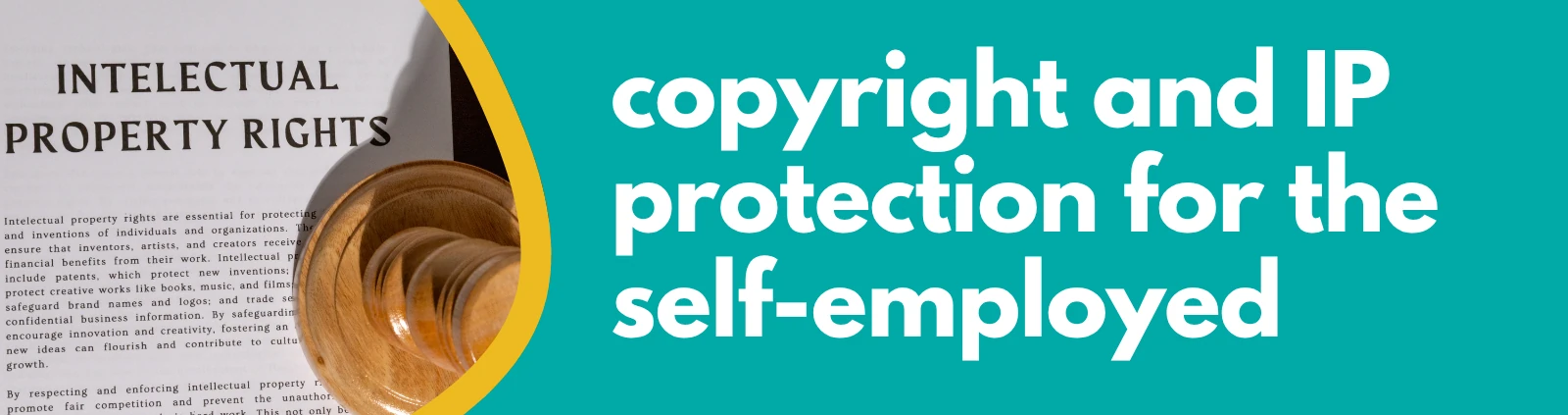

When you work for yourself, your ideas are often your most valuable asset. The logo you designed, the name you trade under, the articles and photographs you produce, the code you write, the processes you have refined over years of practice. All of these can be classed as intellectual property, and all of them can be protected. Yet a surprising number of freelancers and sole traders leave their IP completely exposed, assuming that protection is something only large companies need to worry about.
This blog post looks at what intellectual property is, which types apply to self-employed workers, how to protect each one under UK law, and the practical steps you can take today. It is aimed at freelancers, sole traders, contractors and small business owners who want to safeguard what they have built without spending a fortune on legal fees.
What is intellectual property?
Intellectual property, usually shortened to IP, refers to creations of the mind that the law recognises as belonging to you. This includes brand names, logos, inventions, written and visual work, designs, and the confidential know-how that gives your business its edge.
In the UK, there are four main types of IP protection, and it is worth understanding them because they work in very different ways. Some protect your work automatically the moment you create it. Others only apply once you register them formally and pay a fee.
- Copyright protects original creative and literary work such as writing, photography, illustration, music, film and software code. It arises automatically and does not need to be registered.
- Trade marks protect the signs that identify your business, such as your name, logo or slogan. These must be registered to gain full protection.
- Registered designs protect the appearance of a product, including its shape, colours, texture and decoration. These must be registered.
- Patents protect inventions and how they work. These must be registered and are the most complex and expensive form of protection.
You can read the government’s overview of all four types on the GOV.UK intellectual property pages, which is the definitive starting point for any UK business owner.
Who does this apply to?
If you produce anything original in the course of your work, this applies to you. A freelance copywriter owns the copyright in the words they write. A graphic designer owns the copyright in their illustrations. A joiner who has developed a distinctive product might have a registrable design. A consultant trading under a memorable business name has something worth protecting as a trade mark.
Being a sole trader rather than a limited company makes no difference to whether you can own IP. As an individual, you can hold copyright, register trade marks, register designs and hold patents in your own name. The key difference is that your business and your personal legal identity are one and the same, so your IP is held by you directly rather than by a separate company.
A common and costly mistake is assuming that because you paid someone to create work for you, you automatically own it. In many cases the freelancer or agency who created the work retains the copyright unless a written assignment says otherwise. This cuts both ways, so it matters whether you are the one creating work or the one commissioning it.
Copyright: the protection you already have
Copyright is the most relevant form of IP for the majority of freelancers, and the good news is that you do not need to do anything to obtain it. Under UK law, copyright protects original work automatically from the moment it is created and fixed in a tangible form, whether that is a document, a design file, a recording or a line of code.
There is no copyright register in the UK and no official copyright application to submit. This is different from countries such as the United States, where registration is available and often advisable. In the UK, protection is automatic, which is convenient but also means you carry the burden of proving when and by whom the work was created if a dispute ever arises.
How to strengthen your copyright position
Because there is no register, sensible record keeping is your best defence. Practical steps include:
- Marking your work with the copyright symbol, your name and the year, for example © A. Smith 2026. This is not legally required but signals ownership clearly.
- Keeping dated drafts, original files and version histories that show the development of your work over time.
- Emailing a copy of finished work to yourself or storing it in a timestamped cloud service, so you have independent evidence of the date of creation.
- Using written contracts that state clearly who owns the copyright in commissioned work.
You can learn more about how copyright works and how long it lasts on the GOV.UK copyright guidance. In most cases, copyright in written and artistic work lasts for the creator’s lifetime plus 70 years.